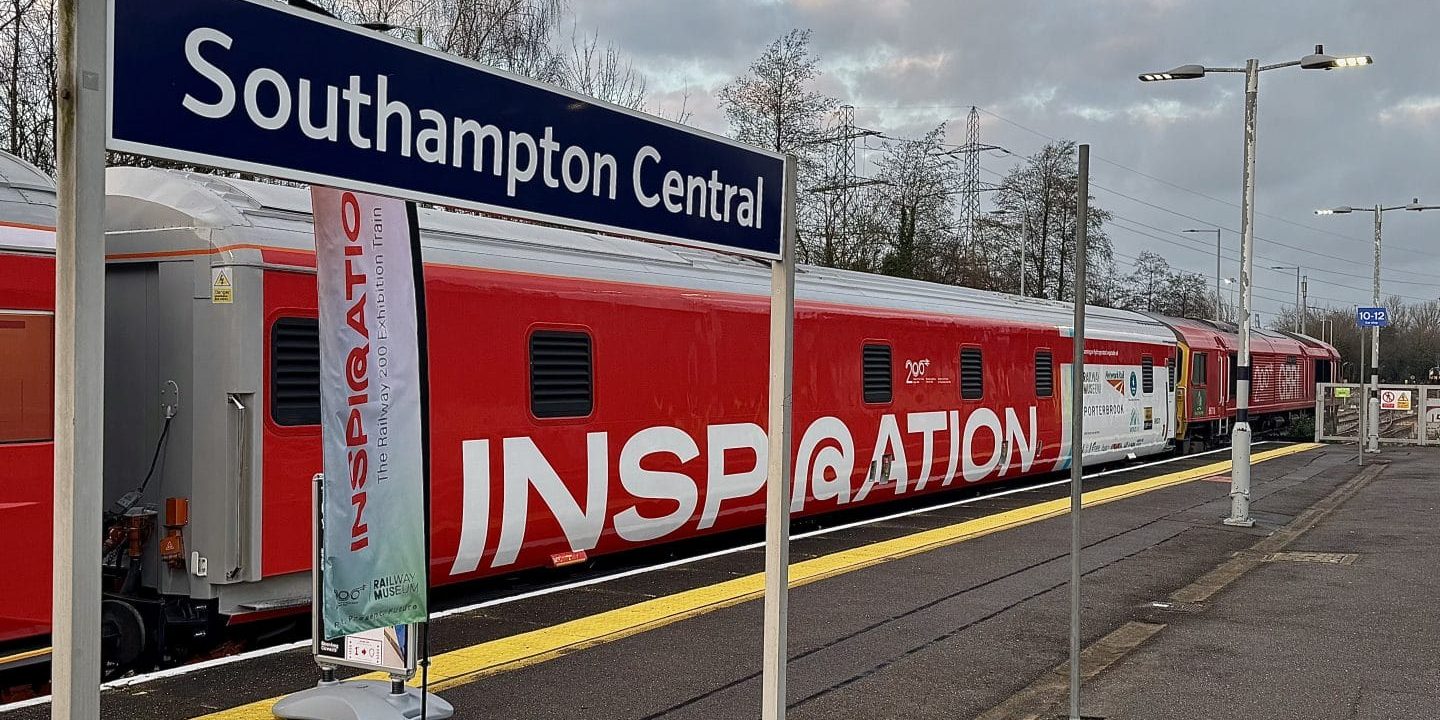
In 1825, the modern public railway was born with the opening of the Stockton & Darlington Railway. Two hundred years later, this momentous anniversary is being celebrated across the country, with the Railway 200 Inspiration Train Exhibition visiting 60 stations. The exhibition showcases the railway’s past, present, and future, alongside career opportunities and interactive displays designed to engage visitors of all ages.
South Western Railway hosted the Railway 200 anniversary celebrations at Southampton Central Station. Southampton was the first city in the region to be connected via the rail network, with the Southampton–Winchester line opening in 1839 and the Southampton–London link completed in 1840.
Rail connectivity has been vital to our region ever since—supporting both international and domestic travel, transporting Queen Victoria to the former Gosport station en route to Osborne House on the Isle of Wight, and moving troops, munitions, and supplies to Portsmouth and Southampton during both World Wars.
The Lord Mayor of Southampton, James Baillie, officially welcomed and opened the Inspiration Train Exhibition to the city, emphasising the importance of the railway in connecting Southampton nationally and internationally, supporting trade, tourism, and economic growth.
Today, around 4.8 million journeys are made on the rail network every day. The railway continues to play a crucial role in regional growth, enabling sustainable travel, creating jobs, and unlocking opportunities across the Central South. Network Rail alone employs approximately 40,000 people nationwide. While we’re all familiar with roles such as engineers, train drivers, and conductors, the railway also employs architects, police officers, drone pilots, ecologists, community rail officers, cybersecurity specialists, telecoms engineers, and marketers.
A special thank you to Laurence Bowman and Phil Dominey from South Western Railway for organising this historic event and bringing it to Southampton, and to Steam Town Brew for entertaining us with regional, railway-themed shanty singing.